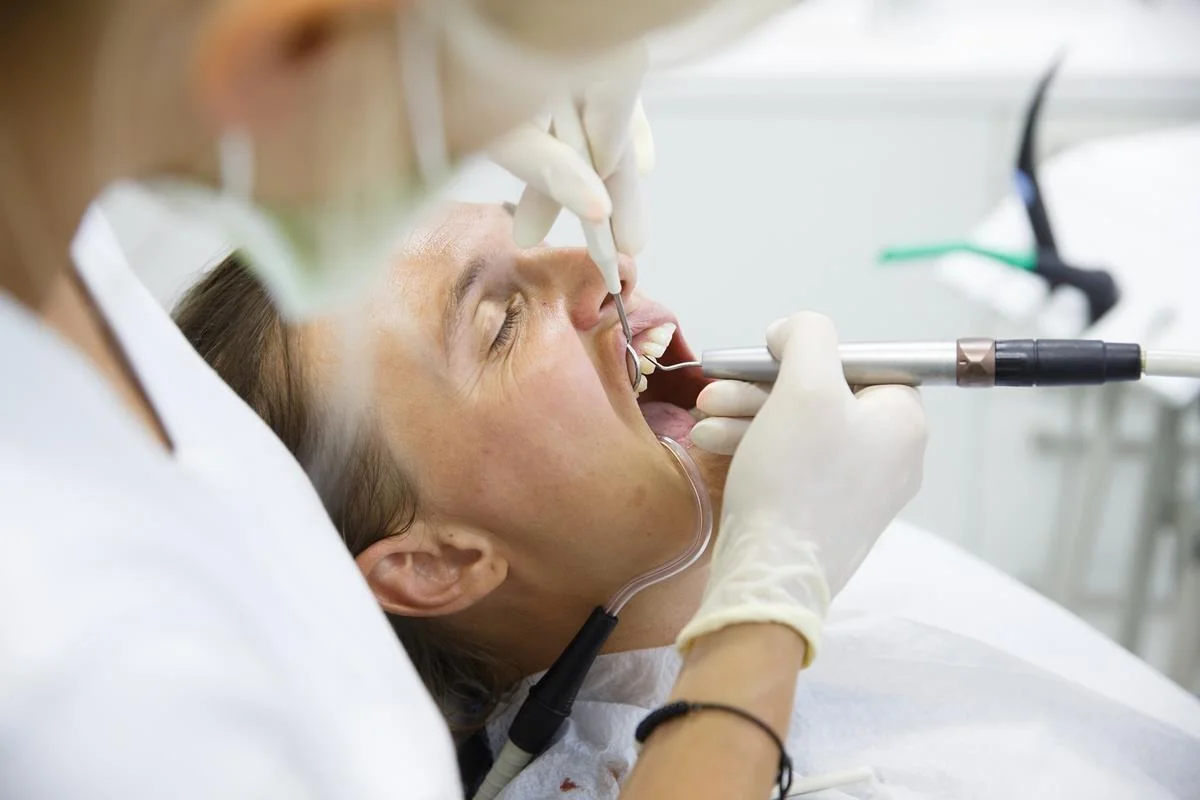
A denture that stays firmly in place, so you can eat and talk with more confidence
If you're missing most or all of your teeth and want something sturdier than a traditional denture, implant supported dentures in Carnegie, OK could be the answer. Liberty Dental welcomes new patients and accepts a broad range of PPO insurance plans, and we're upfront about pricing so you know what to expect before treatment begins. Implant-supported dentures, sometimes called snap-in dentures, use a small number of dental implants to hold a removable denture firmly in place. They sit in the middle ground between traditional dentures, which rest on the gums and can shift, and All-on-4, which is a fixed, non-removable option anchored to four implants. If a denture that stays put but still comes out for cleaning sounds right for you, keep reading.
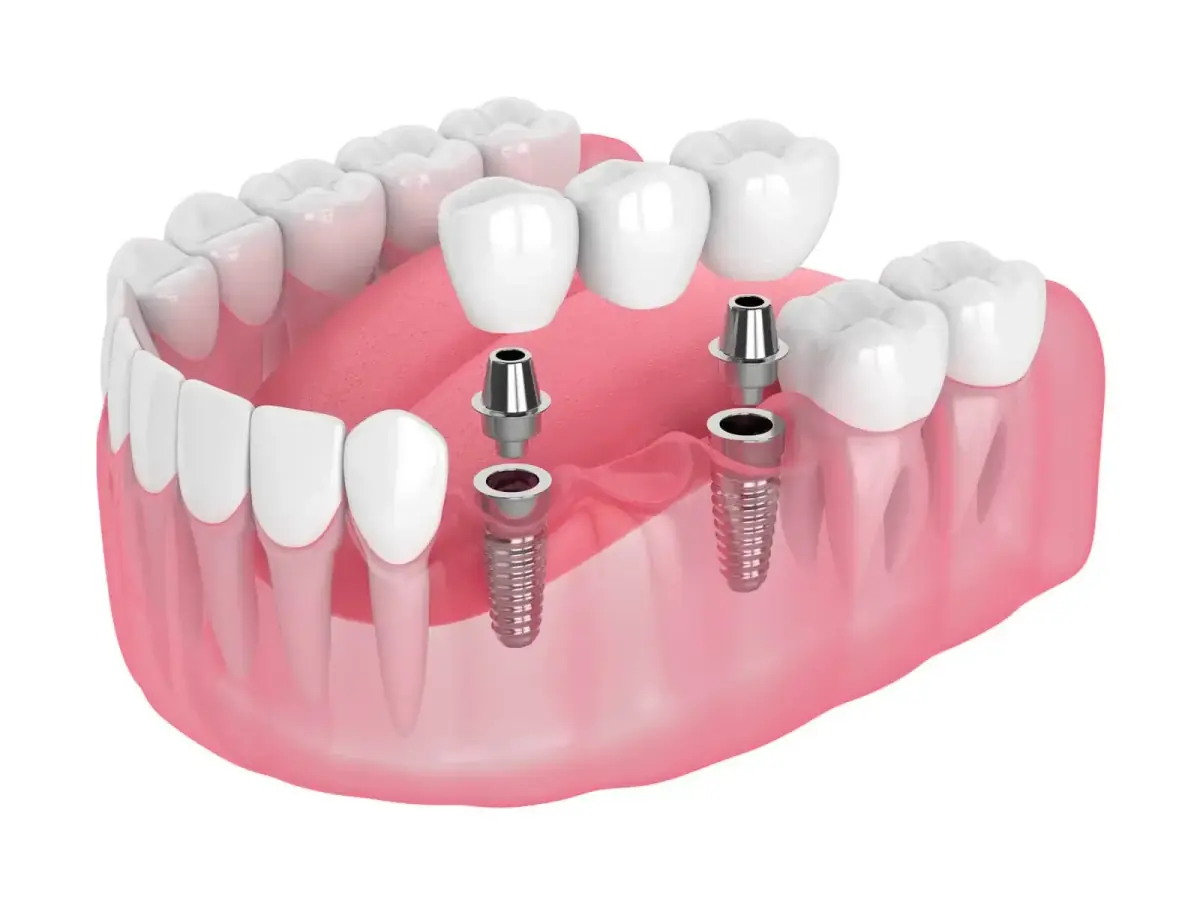
Implant-supported dentures, also called snap-in dentures, combine two things patients often ask about separately: dental implants and dentures. A few implants, usually two to four per arch, are placed in the jawbone. Once healed, they act as small anchor points. Your denture then clips, or "snaps," onto these anchors, so it stays secure when you eat, talk, and smile. Unlike a traditional denture, it won't slide around during the day, and unlike All-on-4, you can still take it out at night to clean it and give your gums a rest.
This option is part of our broader dental implants services, which range from replacing one missing tooth with a single tooth implant to full-arch solutions. Implant-supported dentures work well for patients who want more stability than a traditional denture offers but don't need, or aren't ready for, a fully fixed option.
Patients choose implant-supported dentures for a few common reasons:
A denture that stays firmly in place, so you can eat and talk with more confidence
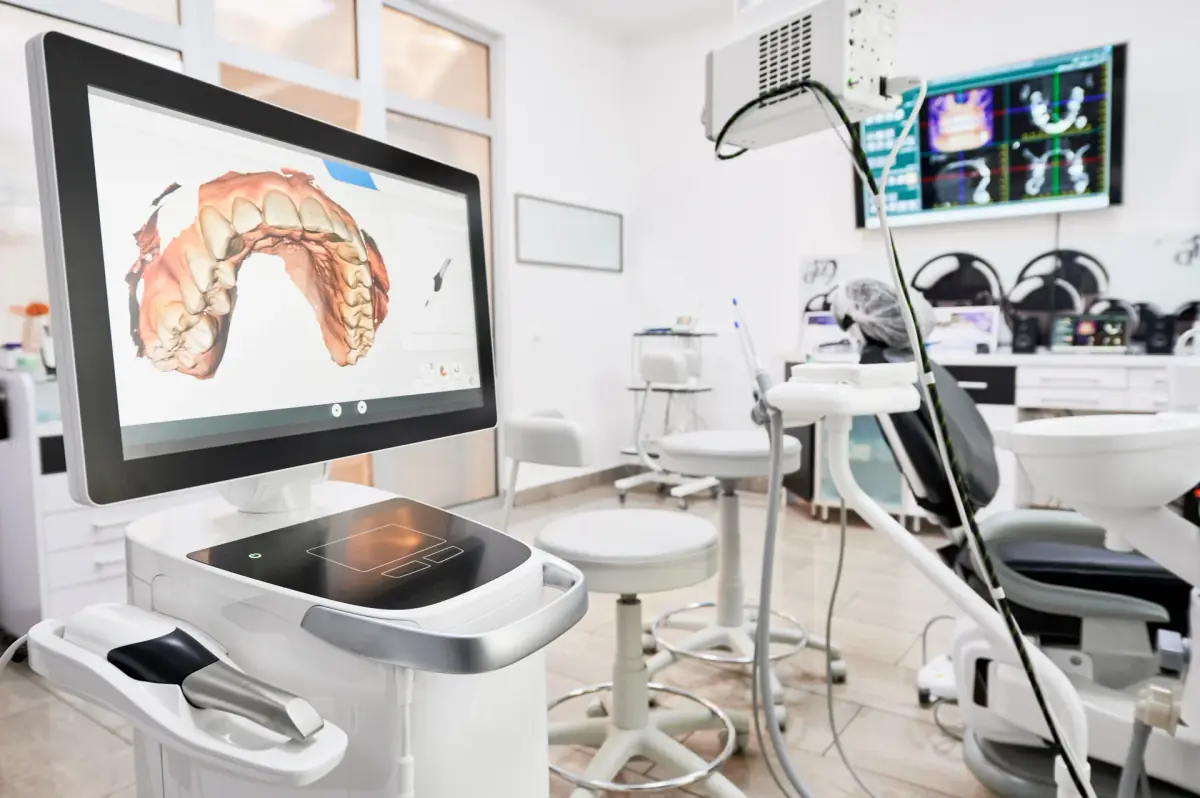
Less slipping and gum irritation, since the implants take pressure off your gums
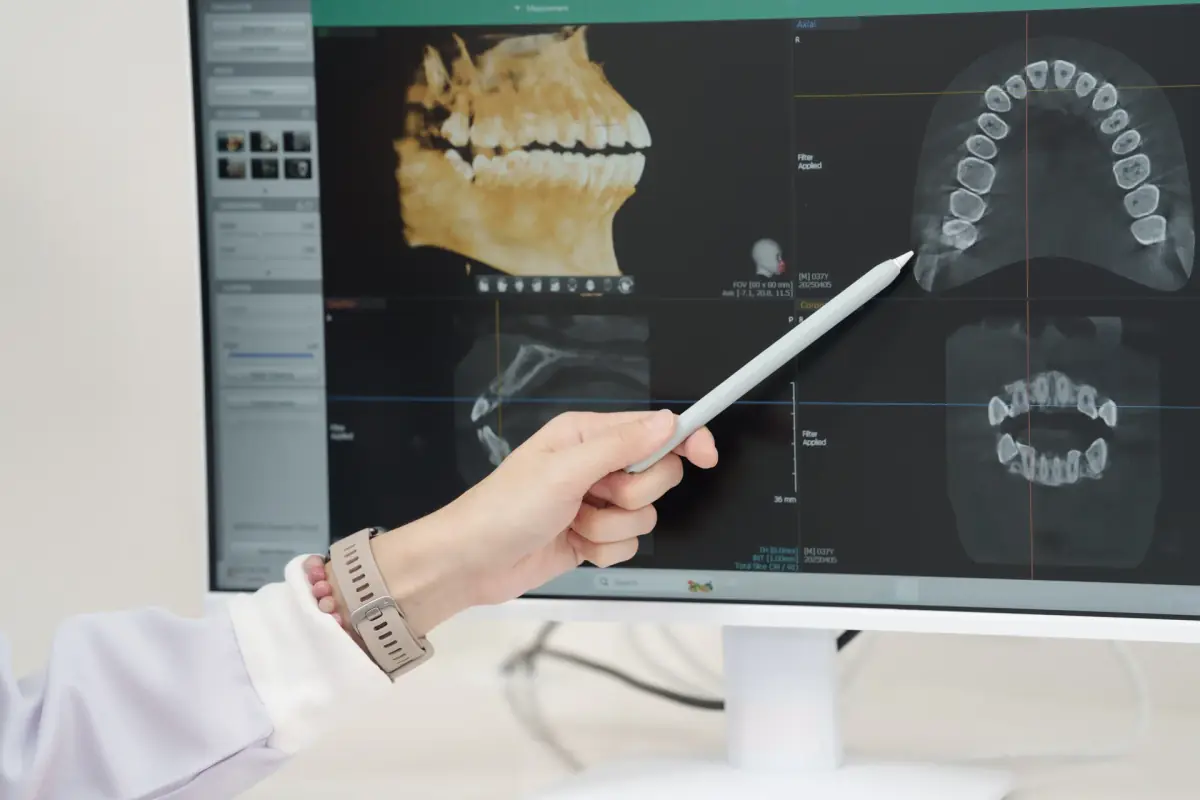
A removable design, so caring for your denture and your gums stays simple
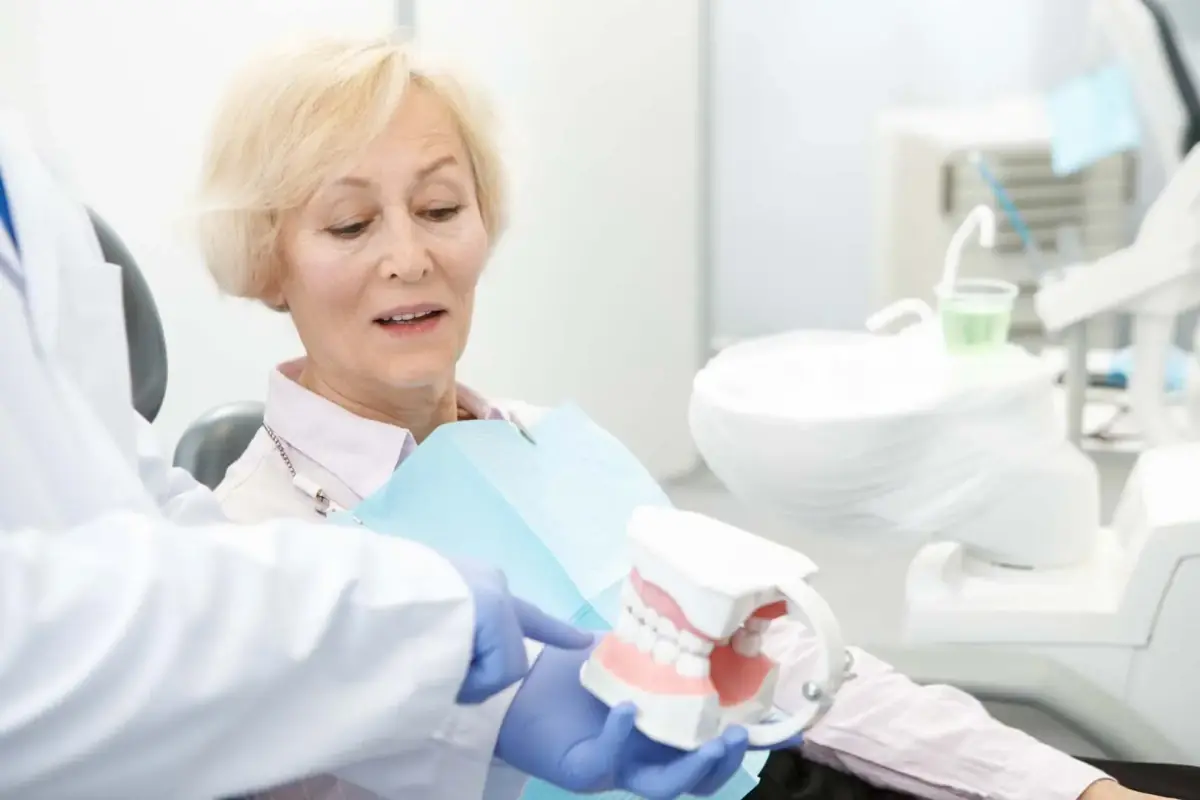
Help preserving jawbone, since implants provide stimulation a traditional denture can't
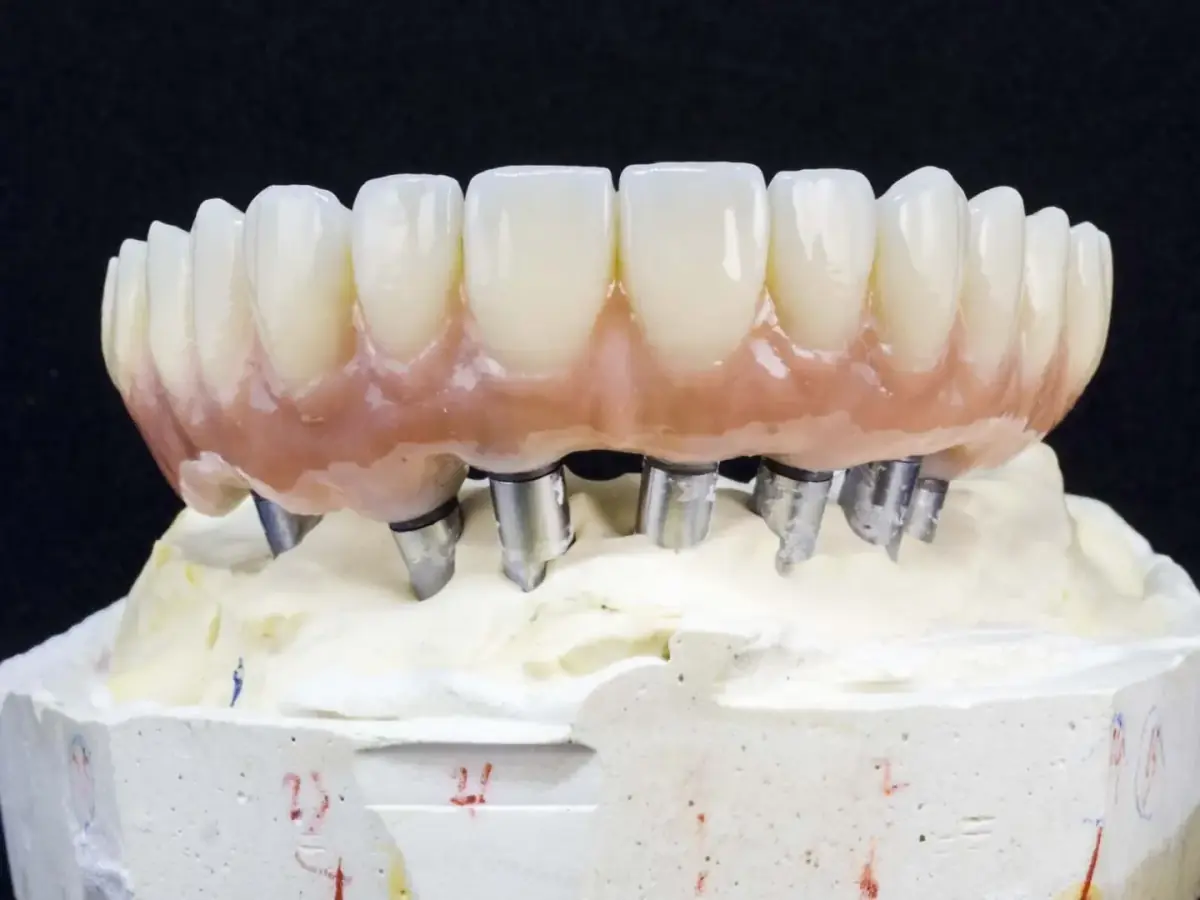
A more secure, comfortable fit that many patients say helps them feel like themselves again
How much benefit you notice depends on your bone health, how many implants you have, and your overall dental history. Dr. Woolford will walk you through what to expect for your specific situation.

Getting implant-supported dentures usually happens in a few steps. First, Dr. Woolford examines your mouth and jawbone to see if you have enough bone to support implants. If your jawbone has thinned out over time, bone grafting may be recommended first to build a stronger foundation.
Once your jaw is ready, a small number of implants are placed and given time to heal and bond with the bone, which can take a few months. During healing, you may wear a temporary denture so you're never without teeth. When healing is complete, your custom denture is fitted with attachments that snap onto the implants. Dr. Woolford explains each step along the way, so you always know what's coming next.
Choosing the right denture option comes down to your goals, your budget, and how much bone support you have. Here's how implant-supported dentures compare to the two options patients ask about most.
| Traditional Dentures | Implant-Supported Dentures | All-on-4 | |
|---|---|---|---|
| Removable | Yes | Yes | No |
| Stability | Held by suction and adhesive; can shift | Snaps onto implants; stays firmly in place | Fixed in place; does not move |
| Implants needed | None | Usually 2 to 4 per arch | 4 per arch |
| Daily cleaning | Remove and clean separately | Remove and clean separately | Brush in place like natural teeth |
| Adhesive required | Often yes | No | No |
| Jawbone preservation | Limited; bone can continue to shrink | Yes; implants stimulate the bone | Yes; implants stimulate the bone |
| Best for | Patients looking for an affordable, non-surgical starting point | Patients who want extra stability but prefer a removable option | Patients who want a permanent, non-removable full-arch solution |
The cost depends on how many implants you need, whether bone grafting is required first, and which arch or arches you're restoring. Because every treatment plan looks different, the best way to get an accurate number is a consultation with Dr. Woolford. Liberty Dental accepts a broad range of PPO insurance plans and is happy to talk through payment options upfront.
Most implant-supported dentures use two to four implants per arch, though the exact number depends on your jawbone and how much support your denture needs. Dr. Woolford evaluates your bone with digital imaging to recommend the right number for your case.
Yes, many patients who feel frustrated with a loose or shifting traditional denture switch to an implant-supported option. Dr. Woolford can evaluate your current denture and jawbone to see if you're a good candidate, and in some cases your existing denture can even be adapted to snap onto new implants.
You shouldn't have to worry about your denture moving when you laugh, chew, or talk with friends.